
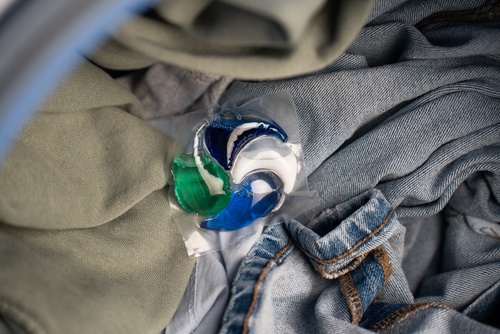
Cold-water washing has quietly become the new standard in many parts of the world. Driven by energy efficiency, sustainability goals and advances in detergent formulations, consumers are increasingly choosing wash cycles between 15°C and 30°C to reduce electricity consumption and carbon emissions. This shift has fundamentally changed the performance requirements for detergent pods and water-soluble packaging. Consumers expect products to dissolve quickly, release their contents efficiently and leave no visible residue—even under cold-water conditions.
At the center of this transition is water-soluble PVA film. Yet designing a film that performs exceptionally well in cold water involves far more than simply making it water soluble.
The real challenge is engineering a material that dissolves rapidly and completely in cold water while maintaining the strength required for manufacturing, packaging, transportation, storage and everyday handling throughout its lifecycle.
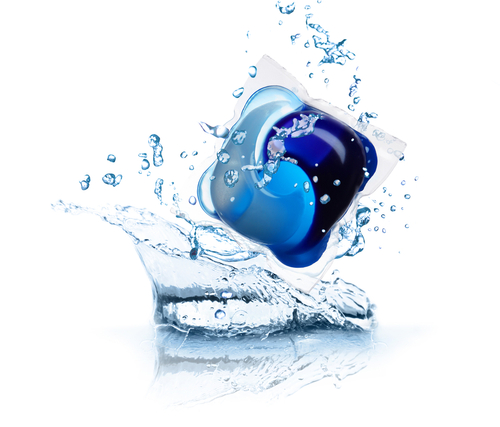
Lower water temperatures slow molecular movement, making it more difficult for water to penetrate the polymer structure. A film that dissolves rapidly at 40°C may behave very differently at 20°C or below.
Consumers, however, expect consistent performance regardless of the wash program they choose. Whether washing in warm or cold water, they expect detergent pods to dissolve completely and perform exactly as intended. For material engineers, cold-water dissolution is no longer just another product feature—it has become a benchmark of engineering capability.
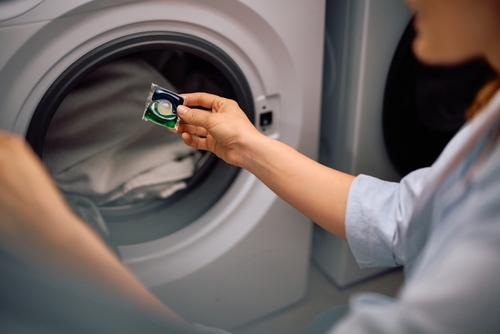
A single PVA film must survive numerous stages before it ever reaches the washing machine, including high-speed automated packaging, transportation, warehouse storage and everyday consumer handling. That means it must possess sufficient mechanical strength to withstand industrial production while maintaining stability across different climates and storage conditions.
Yet once inside the washing machine, that very same film must immediately begin a completely different job: absorbing water, dispersing evenly and dissolving completely. This is the classic balancing act of polymer engineering. Improving dissolution can reduce strength, while increasing strength may slow dissolution. Optimizing one property often affects another.
The best-performing PVA films are not those that maximize a single property, but those that achieve the optimal balance between mechanical performance, processability, storage stability and cold-water dissolution.
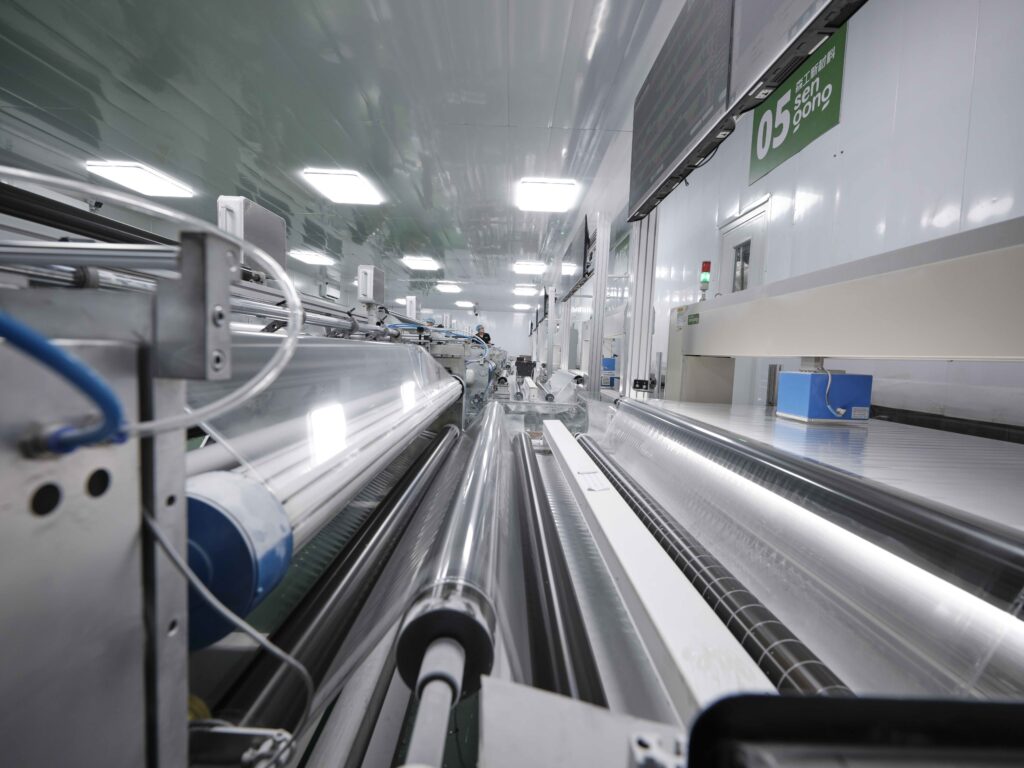
Outstanding cold-water performance is rarely determined by a single ingredient. It is the result of an integrated material design strategy.
Material scientists carefully optimize polymer structure, degree of hydrolysis, molecular weight distribution, additive systems, plasticizer technology, film thickness and manufacturing processes to achieve the desired balance of properties. This is why two films that appear almost identical can perform very differently in real-world applications.
As industries continue pursuing greater efficiency, lower energy consumption and more sustainable manufacturing, water-soluble PVA materials are evolving alongside them. The future of the industry will not be defined simply by which films dissolve, but by which companies can engineer materials precisely for different applications and operating environments.
At Sengong, we believe innovation begins with materials science. From detergent pods and industrial packaging to healthcare, textiles and emerging applications, we continue to advance water-soluble PVA technologies that help enable the next generation of sustainable materials.