
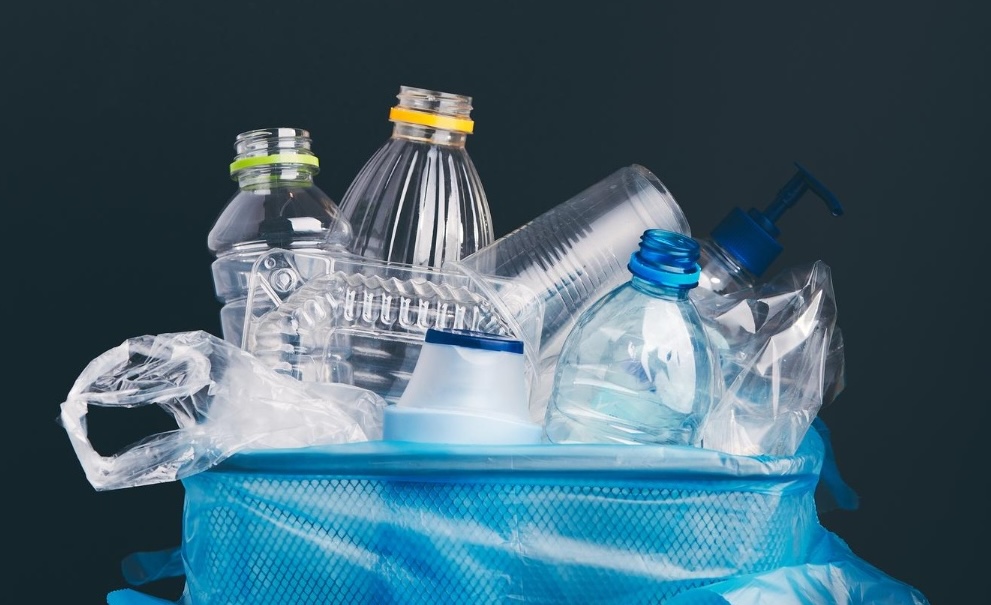
Recycling of plastics call for single-material purity for it to work. A regular single-use PET plastic bottle has as many as 6 different materials (bottle, cap, label, glue, beverage). This makes recycling complex and expensive. All the various materials need to be separated and cleaned before recycling can take place. Even if the PET is melted down with 200˚C heat, impurities remain, which degrades the recycled material. This makes high purity recycled plastic expensive (and exclusive), while commonly recycled PET plastics are often downgraded into broom bristles. Lower quality recycled PET plastics are brittle. If it were recycled again, it gets increasingly brittle, and at the end of life, it becomes landfill.
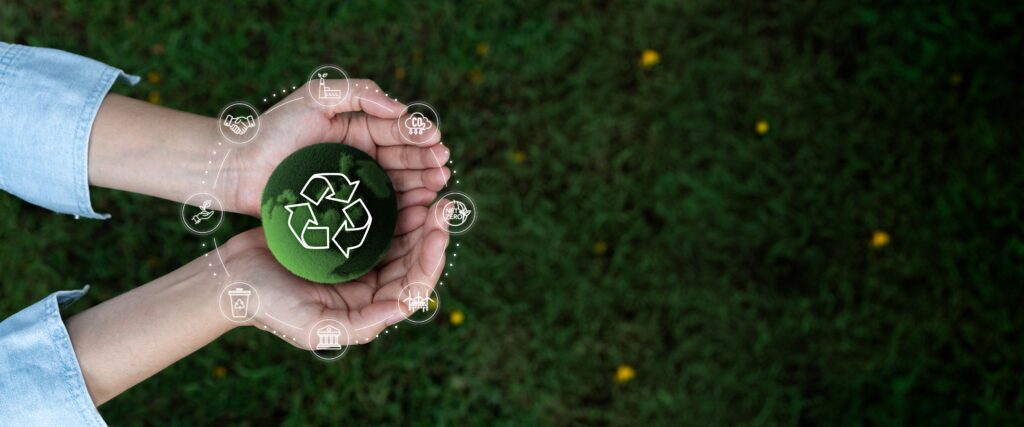
And since it is hydrophilic and biodegradable, PVA’s final destination can be agricultural use, as a soil enhancer to help retain water to help reforestation/agricultural efforts or reduction of deserts around the world.
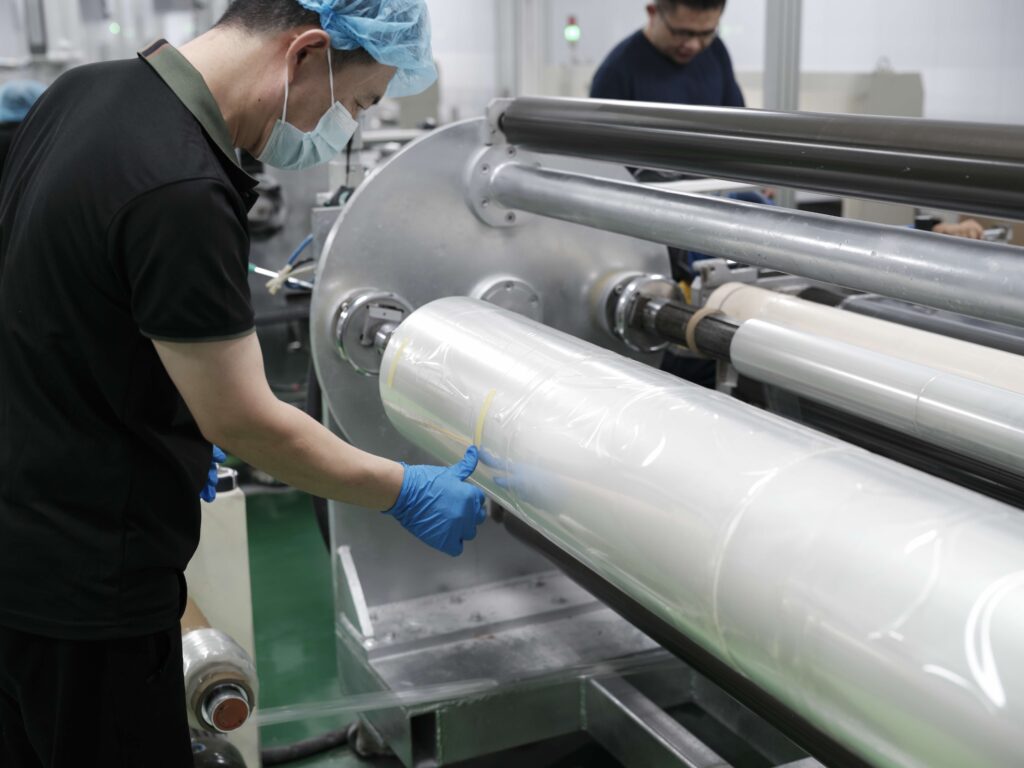
PVA is FDA-approved non-toxic, odorless and colorless synthetic plastic polymer safe for use in pharmaceutical and food industries. It has been around since 1912, and water-soluble PVA material has been used across wide fields of applications, such as children’s white glue, contact lens material and even cartilage replacements. It’s affordable, accessible & widely available.
Being biodegradable doesn’t need to cost the earth. Recycling or re-using PVA is much easier: it’s water soluble, and the recycling temperature is much lower: 100˚C or less. The recycled material quality is very high, and removing impurities is much simpler, since it’s water-soluble. And even if some impurities remain, it doesn’t affect PVA material performance. Overall, PVA is (1) light (2) water soluble (3) carries high secondary value.


With lean production and continuous improvement methods, our manufacturing operations deliver very high input-output ratios, with cost control and production efficiency that far surpass industry standards.
While many corporations are increasingly pressured by regulations to meet more demanding carbon footprint standards, the need to tackle climate change through innovative manufacturing methods have always been a part of our focus.
Remember how energy plants have smokestacks with steam dissipating into the environment? We’ve piped that waste steam to our factory as a key heat source for our manufacturing line. This saves massive energy costs – which is why, compared to other PVA manufacturers, we have the lowest carbon footprint.
Heat is essential to the manufacture of PVA. Conventional PVA production use gas to heat up oil, providing the heat for the production. Our system stabilizes the heat from the steam, while the steam is contained in a special pipe to keep moisture out. The heated pipes provide the (1) heat source for the drying process, and (2) into the reactors that produce the PVA material. In our manufacturing, there is zero material wastage – everything is reused – and we use minimal electricity at the factory.
Efficient production volume also keeps carbon footprints small, costs low and environmentally unfriendly materials at bay. In 2018, PVA film manufacturing efficiency used to be very low: 2 meters/min. However, PET plastic is produced at up to 80 meters/min, making it readily available and cost-effective for most manufacturers. This, in part, made PET a common choice for many companies trying to manage their costs.
Today, our in-house developed PVA production lines boast a rate of manufacturing to 8 meters/min, four times more efficient than conventional PVA film manufacturing lines.
Added together, this keeps our PVA films green & affordable: priced nearly as low as PET plastic, finally giving many industry customers the power to choose a biodegradable material.
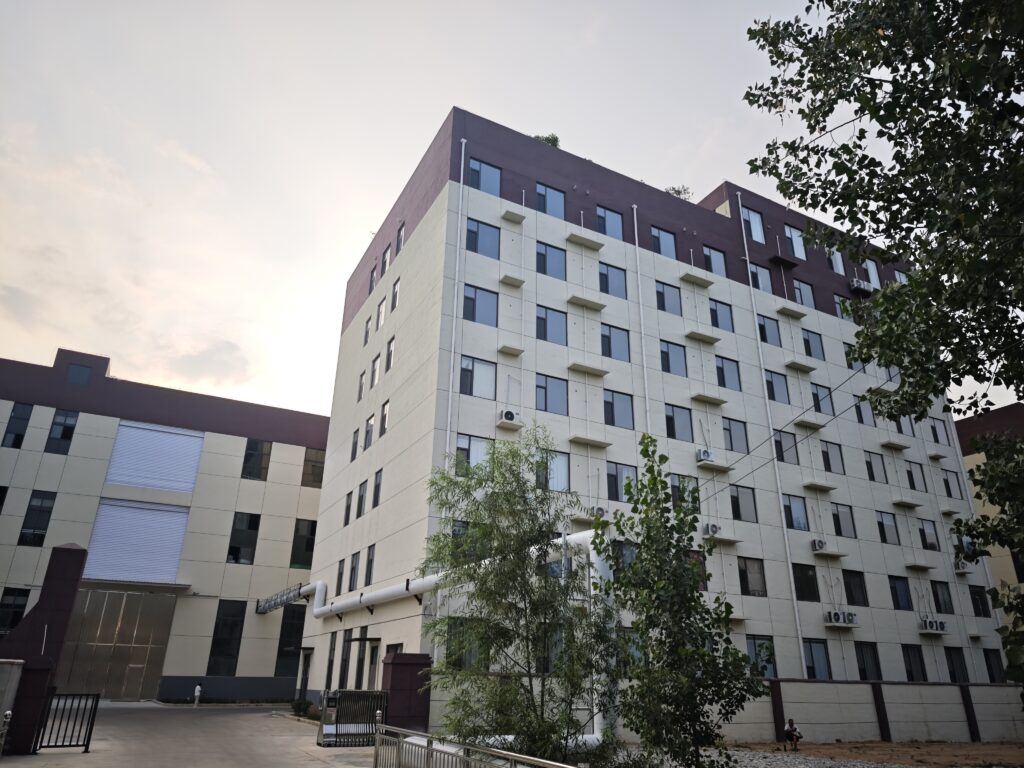
Backed by official Environmental Impact Assessment (EIA) reports approved by government authorities.
Our hyper-efficient production lines are 400% faster than conventional PVA film manufacturing lines, offering shorter order lead times and faster deliveries.
With advanced heat recovery: our innovative in-house system makes use of piped-in waste steam efficiently, with an energy reuse rate of 80%. Combined with infra-red heating tech, it reduces the overall energy costs by 50%. Uniform heat is key to high-quality PVA films.
We use self-developed formulas, locally-sourced raw materials & custom production methods cut 75% in costs
Our PVA films are extremely uniform in quality, manufactured to a very demanding tolerance – finer than a human hair
50% lower energy costs than industry standard
Our custom in-house designed and assembled high-speed solution-casting production lines cut manufacturing asset costs by 56%, compared to the industry average.
Our in-house designed custom assembly lines deliver extremely low, industry-leading detergent pod defect rate of just 1/100,000.
We are 1 out of 4 manufacturers in the world with a PVA film production capacity of over 3,600 tons