

When detergent pods leak, deform, or lose integrity, the immediate response is often to examine filling lines, packaging methods, or storage conditions.
These factors certainly play a role. But in practice, they are rarely the root cause. Most shelf-life failures are not created in the warehouse—they are determined much earlier, at the materials level. The ability to balance these competing requirements is what ultimately defines shelf life.
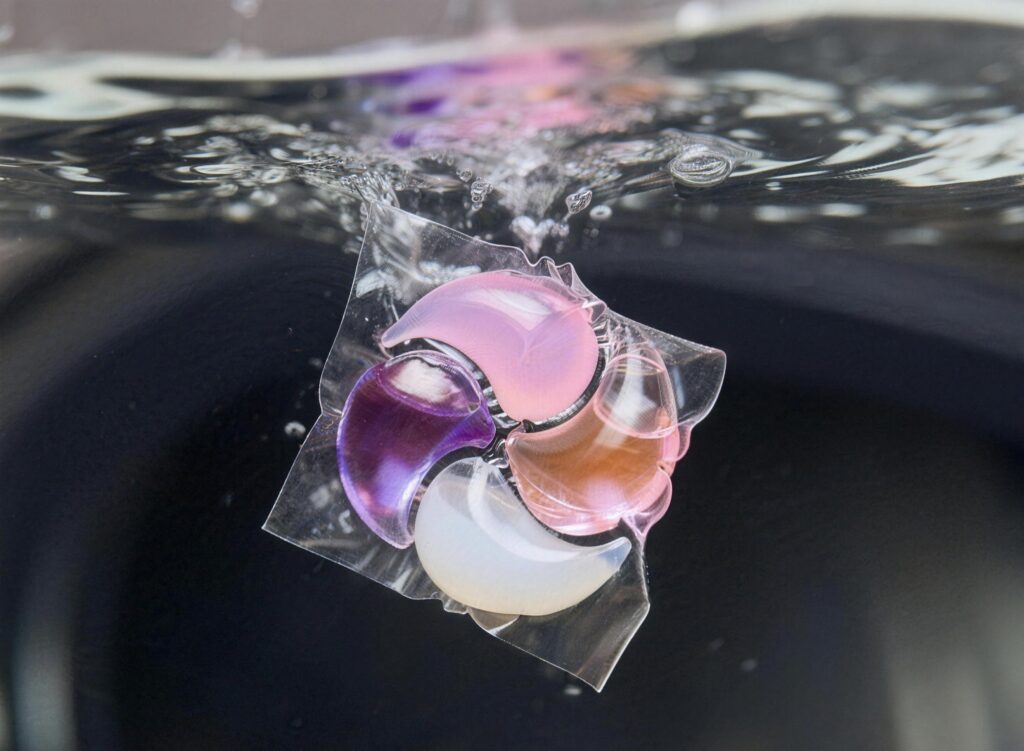
PVA films are inherently hydrophilic. This property enables water solubility, but it also makes moisture control the defining challenge for long-term stability. Even when pods are properly packaged, they are not isolated systems. Ambient humidity slowly migrates through the film over time.
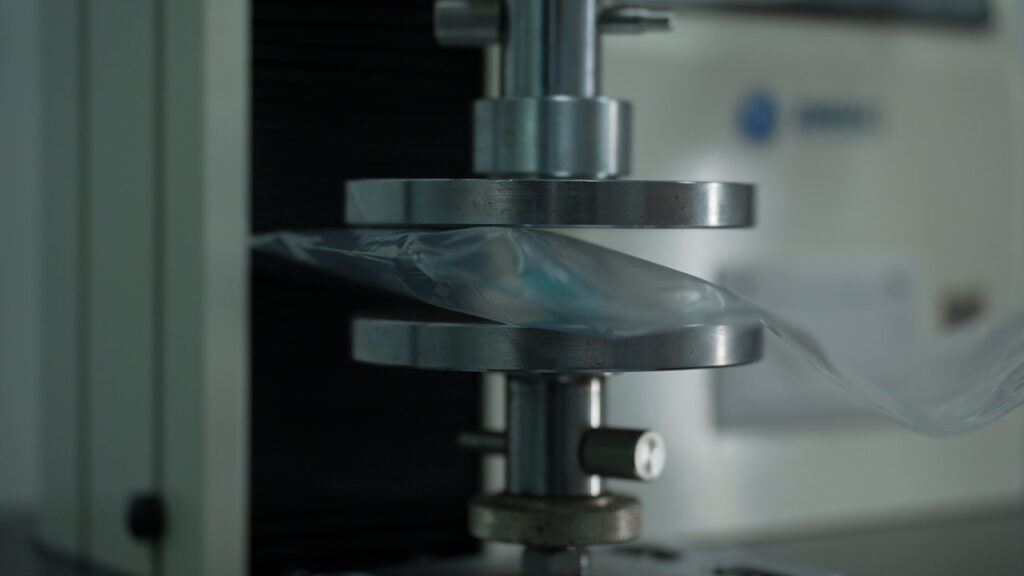
As moisture accumulates, the film may soften, lose mechanical strength, or become more prone to deformation. Under compression during storage or vibration during transport, these weakened areas become likely failure points. While secondary packaging can slow moisture exposure, it cannot overcome the intrinsic permeability of the film. Long shelf life begins with controlling how the material itself interacts with water vapor.
Another common misconception is that a film that performs well during initial production will behave the same months later. PVA films evolve over time. Polymer molecular weight distribution, degree of hydrolysis, and plasticizer stability all influence how a film ages.
Without proper design, aging can lead to reduced elasticity, changes in sealing behavior, or inconsistent dissolution. These effects may be minor in the short term, but over 12, 18, or 24 months, they compound. Achieving a true 12–24 month shelf life requires films that are engineered not just for day-one performance, but for predictable behavior across their entire lifecycle.

If shelf-life problems have a physical starting point, it is usually the seal. Seals experience the highest thermal and mechanical stress during manufacturing and remain the most vulnerable region throughout storage.
Seal performance depends on film surface chemistry, thickness uniformity, and thermal response during sealing. Films that are not optimized for these variables may appear acceptable during early production runs yet develop micro-channels or weakened interfaces over time. These failures are frequently blamed on equipment or storage, when the underlying cause is material mismatch.
Moisture resistance, aging stability, and seal reliability are not downstream fixes. They are the direct result of polymer selection and film engineering. Storage conditions can only preserve what the material allows.
As detergent pods become more concentrated and supply chains extend globally, long shelf life is no longer a nice-to-have—it is a requirement. Consistently achieving 12–24 months of shelf stability demands a materials-first approach.
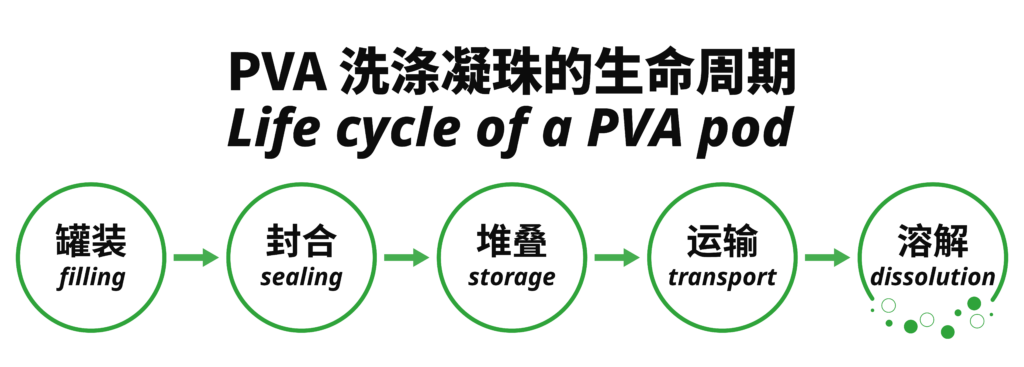
In unit-dose packaging, shelf life is not managed at the warehouse. It is engineered upstream, long before the first pod is ever filled.
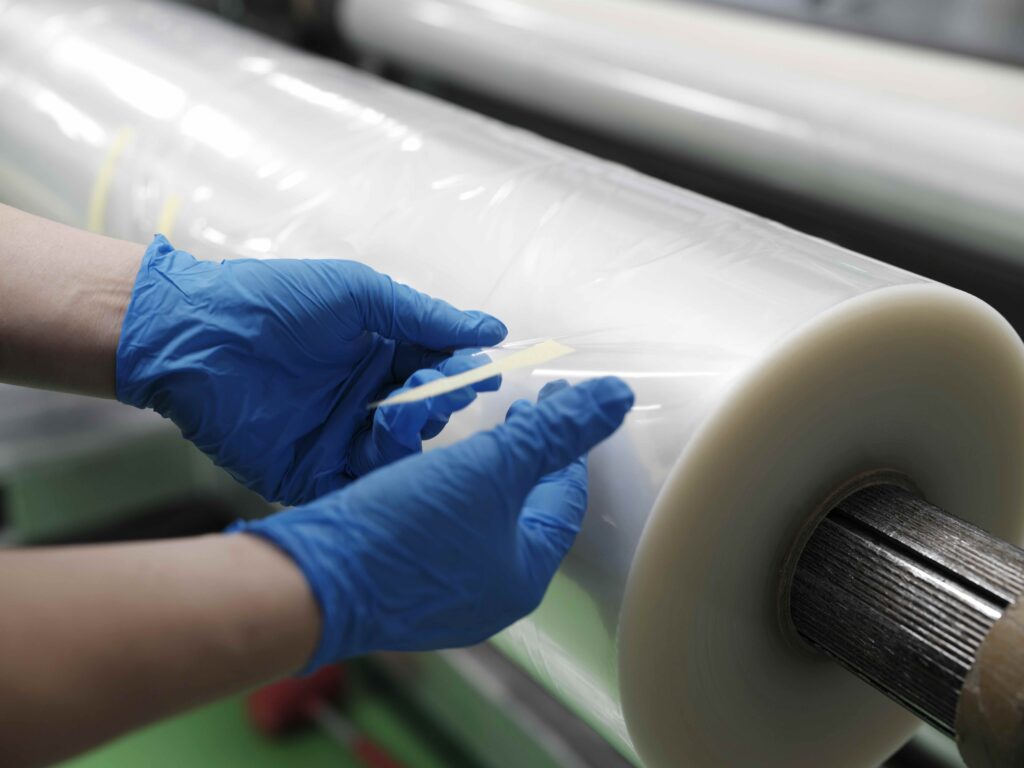
It starts at the material level: our high-performance water soluble PVA films are designed to resist ageing from a molecular level. This science allows its material performance to stay consistent over time, keeping it tough, durable, pliable, with high tensile strength, for plump, reliable and leakproof pods. Because of this, detergent pods made from our films enjoy long shelf lives, supporting complex – and sometimes unpredictable – logistics and storage needs.