
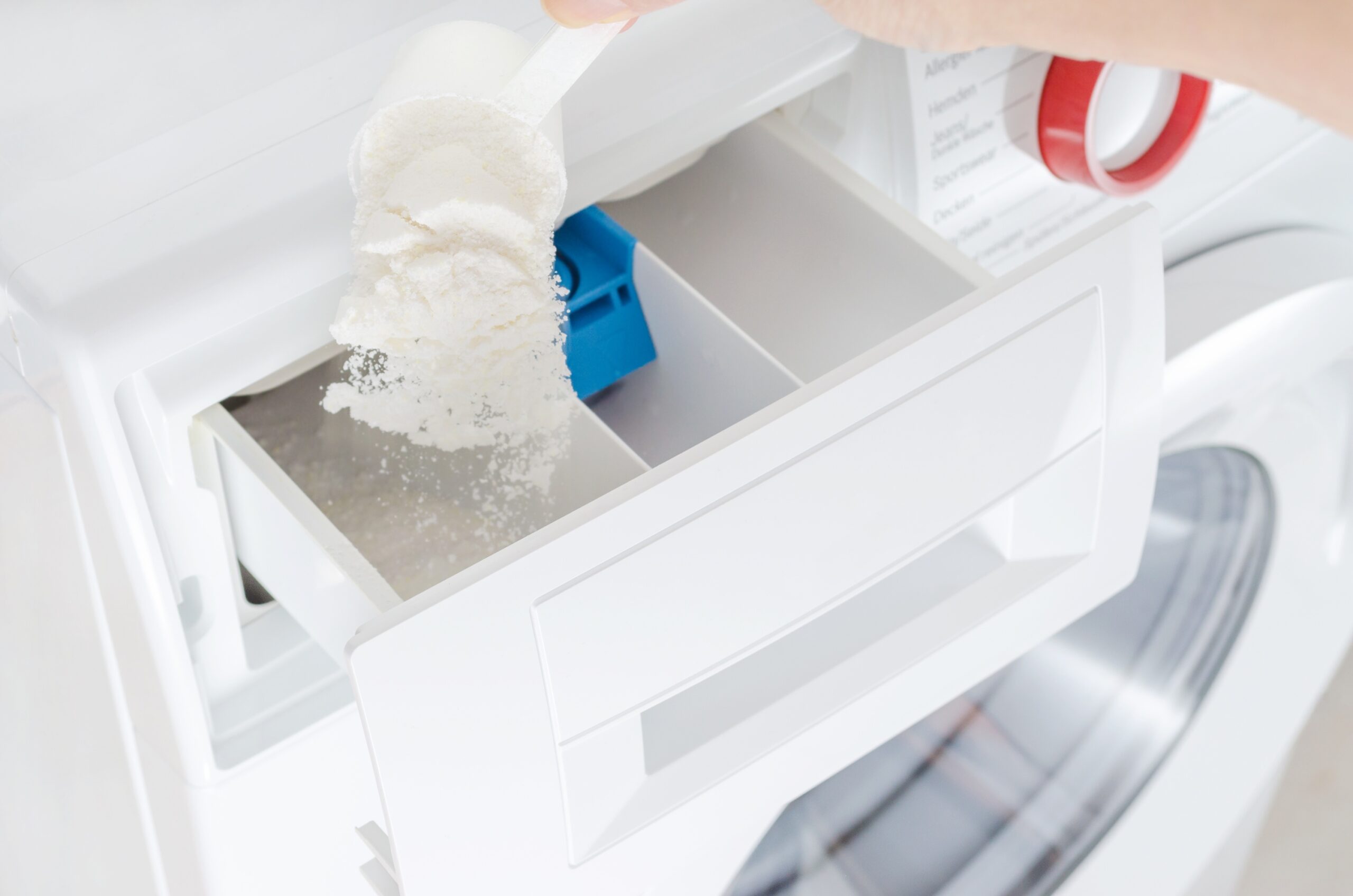
Sustainability conversations around packaging often focus on material substitution: plastic versus paper, fossil-based versus bio-based. While these comparisons are useful, they frequently overlook a more powerful lever—how materials are used within a system. In unit-dose formats such as detergent and daily chemical pods, PVA film plays a quiet but highly effective role in delivering real environmental benefits.
When using traditional laundry, have you noticed how often detergent is over-poured, under-used, or spilled? One of the most important sustainability advantages of PVA film is precise dosing. Each pod delivers a fixed, optimized amount of detergent or cleaning agent, eliminating inconsistent usage. This directly reduces chemical waste and lowers the environmental load entering wastewater systems.
In many real-world scenarios, reducing product overuse or wastage has a greater environmental impact than switching packaging materials alone. Using less detergent per wash means fewer raw materials, lower manufacturing energy, and reduced emissions across the supply chain.

PVA film enables compact, concentrated unit-dose formats that require significantly less bulky secondary plastic packaging than traditional liquid detergents. Conventional bottles contain a high proportion of water, while pods deliver concentrated doses and remove this inefficiency.
Smaller packs mean lower plastic use per wash, reduced transportation weight, and more efficient warehousing and retail logistics. Although PVA film itself represents only a small fraction of total packaging weight, it enables a system that materially reduces overall resource consumption.
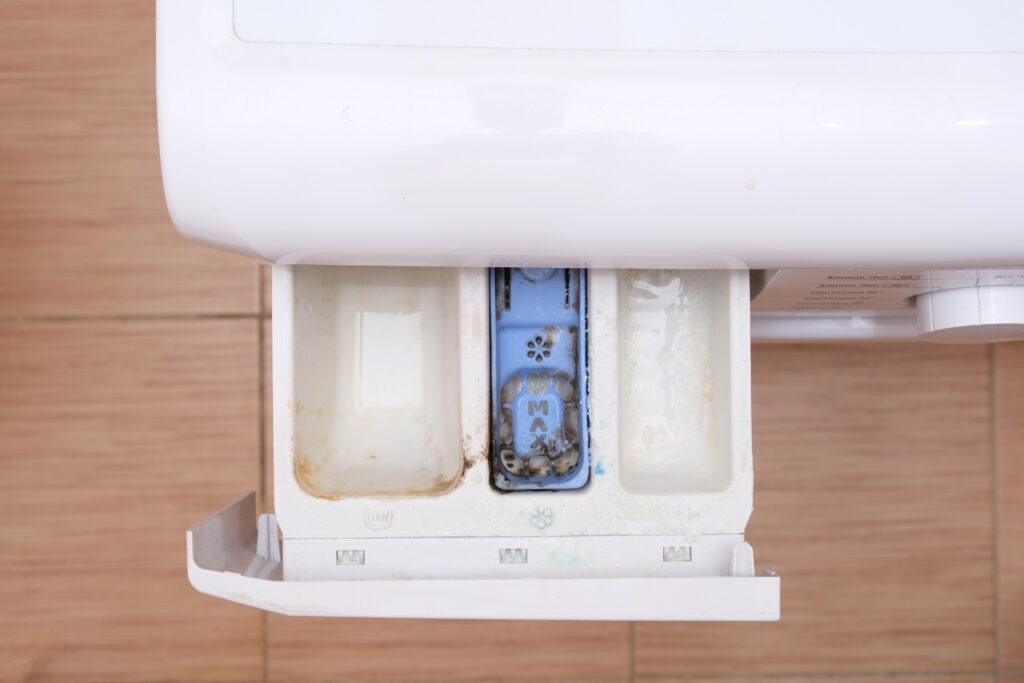
When properly designed, PVA films dissolve fully in water and biodegrade under appropriate conditions. This performance depends on polymer chemistry, molecular design, and processing quality.
High-quality PVA films—such as those produced by Sengong—dissolve cleanly without residue and can be effectively treated in wastewater systems, where microbial activity gradually breaks them down. These sustainability outcomes are the result of intentional materials engineering, not chance.
Materials such as PLA, PBAT, and seaweed-derived plastics are often positioned as sustainable alternatives, but their benefits depend heavily on application and end-of-life conditions. They are also relatively expensive, limiting adoption and scale—reducing their real-world impact.
PLA is bio-based but typically requires industrial composting to degrade effectively—an infrastructure still lacking in many regions. PBAT is biodegradable and flexible, yet petroleum-derived and often blended, complicating lifecycle assessment. Seaweed-based plastics are promising but remain early-stage, costly, and difficult to scale consistently.
PVA differs in that it is designed for intentional dissolution during use, removing the need for collection or composting systems. In unit-dose applications, its end-of-life pathway is built directly into the product design—while remaining more affordable and scalable than many alternative materials.
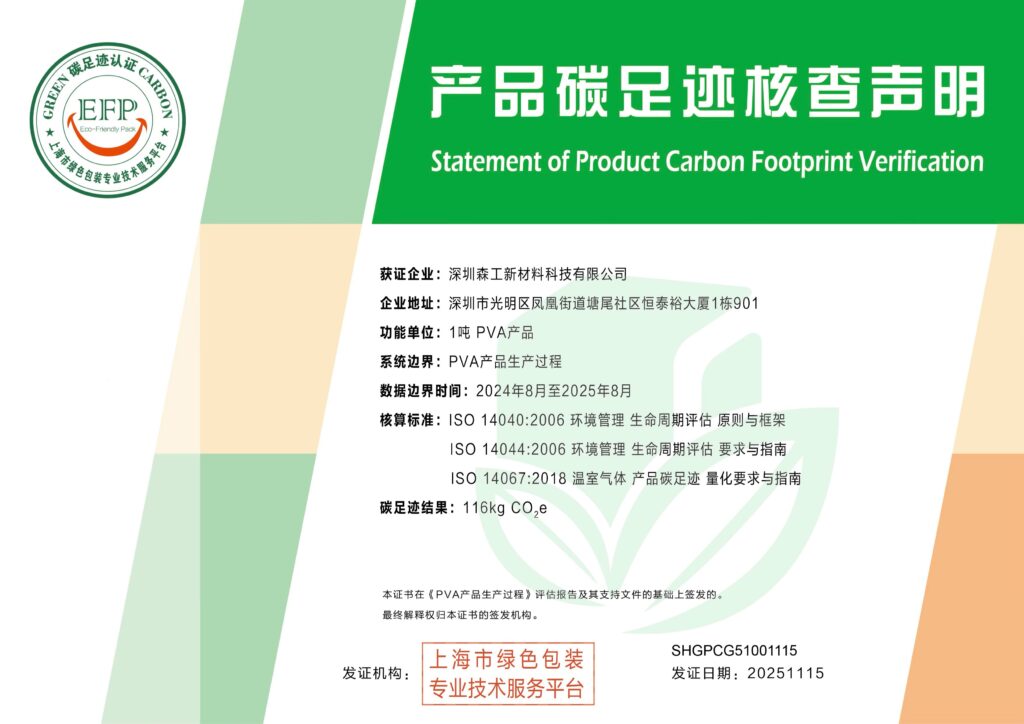
Based on internal life cycle assessments, one ton of Sengong’s finished PVA film carries a carbon footprint of 116 kg CO₂e (cradle-to-gate). This low carbon intensity is achieved through process efficiency—not carbon offsets.
When combined with precise dosing and packaging reduction, the overall environmental and climate impact compares favorably with many materials marketed as sustainable.

Replacing materials without changing product design or usage patterns often delivers limited gains. In contrast, redesigning how products are packaged, dosed, and used can unlock far greater—and more durable—environmental benefits.
Biodegradable, water-soluble PVA film is designed to disappear—but its impact is structural. Sustainability is not only about what materials replace, but how materials are designed, used, and integrated into better systems.